









Specialist Disability Accommodation
Accessible homes designed around your support needs.
Explore Specialist Disability Accommodation designed for people with extreme functional impairment or very high support needs, with features matched to the SDA category approved in their NDIS plan.
Understanding SDA
What is Specialist Disability Accommodation?
Specialist Disability Accommodation, or SDA, is housing designed with features that support people with extreme functional impairment or very high support needs.
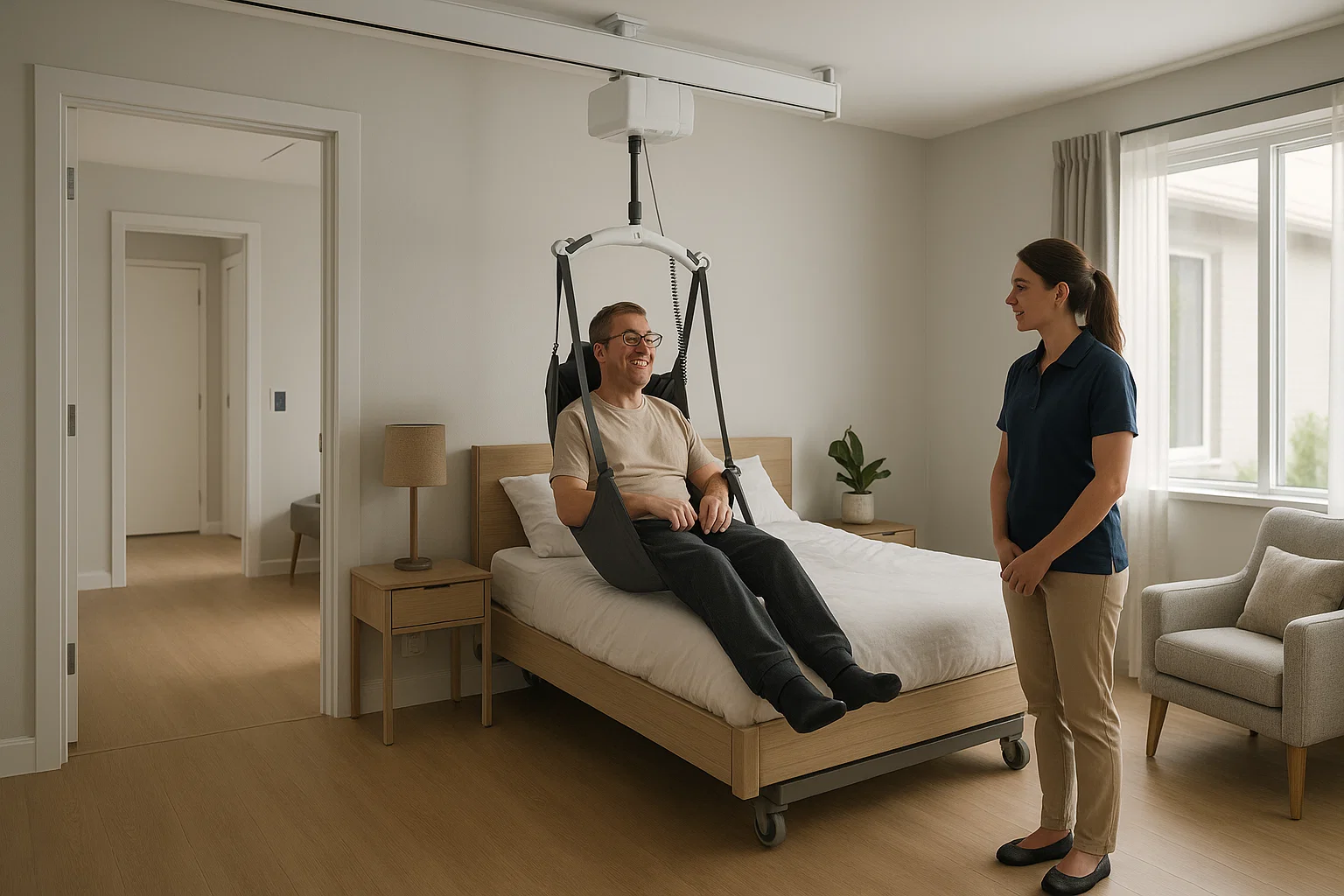
Depending on the approved design category, a home may include wider accessways, accessible kitchens and bathrooms, durable materials, ceiling hoists, backup power or home-automation features.
Who SDA may suit
Housing matched to significant disability-related needs.
SDA is not the right housing option for every NDIS participant. It is generally considered where ordinary housing or other home-and-living options cannot safely meet the person’s disability-related needs.
Extreme functional impairment
The person has substantial difficulty completing daily activities because of their disability.
Very high support needs
The person requires a home that allows other supports to be delivered more safely and effectively.
Standard housing is unsuitable
Other housing options do not provide the physical, sensory or safety features the person needs.
SDA is included in the plan
The participant’s NDIS plan identifies the approved SDA design category, building type and location.
SDA design categories
Four categories for different housing needs.
The category approved in a participant’s plan reflects the design features required to meet their disability-related housing needs.
Improved Liveability
Housing with enhanced physical access and design features for people with sensory, intellectual or cognitive impairments.
Robust
Strong, durable housing designed to improve safety, reduce maintenance and support people with complex behaviours.
Fully Accessible
Housing with a high level of physical access for people with significant physical disability, including people who use a wheelchair at home.
High Physical Support
Housing with extensive physical access and features such as ceiling-hoist provisions, backup power, home automation and communication technology.
An important distinction
SDA is the home. Support services are separate.
SDA funding contributes to the specialist design and provision of the dwelling. It does not pay for personal care, Supported Independent Living, Individualised Living Options or assistive technology.
- SDA funding pays the SDA provider for the eligible dwelling.
- In-home support funding, such as SIL, pays for support workers and assistance.
- Participants generally pay an agreed reasonable rent contribution and ordinary living costs.

Home features
Features shaped by the approved design category.
Every SDA dwelling is different. The features available will depend on the home, its enrolled category and the needs it was designed to support.
Wider accessways
Doorways, corridors and circulation spaces designed to support safer movement through the home.
Accessible bathrooms
Layouts, fixtures and clearances that can support mobility, transfers and personal care.
Assistive technology
Home automation, communication systems or environmental controls where included in the dwelling.
Hoist provisions
Structural or installed features that may support ceiling hoists and safer transfers.
Backup power
Backup power provisions may be included where essential equipment or safety systems require continuity.
Safety-focused design
Durable materials, clear sightlines, emergency systems or other features suited to the design category.

Current opportunities
Explore available accommodation.
Review BHC accommodation opportunities and speak with our team about location, accessibility, compatibility and how a vacancy may align with the participant’s approved plan.
See our available homesOur process
A clearer path to finding the right home.
We work with participants, families, support coordinators and allied health professionals to understand the approved SDA requirements and explore suitable options.
Tell us what is needed
Share the participant’s preferred area, accessibility needs, living preferences and current situation.
Review the SDA requirements
We consider the approved design category, building type, location and other relevant plan details.
Explore suitable options
Where an appropriate vacancy is available, we arrange further discussion, property information and a visit.
Plan a safe transition
If the home is suitable, we coordinate the agreed next steps with the participant and relevant support team.
Why choose BHC
A person-centred approach to accommodation.
Finding a suitable home involves more than checking a list of physical features. The home, location, support arrangements and living environment all need to work together.
Individual needs first
We begin with the participant’s goals, preferences, accessibility needs and approved SDA requirements.
Clear communication
We keep participants, families, coordinators and relevant professionals informed throughout the enquiry process.
Practical transition planning
We help organise the next steps so the move can be planned carefully around the participant and their support team.
Looking for Specialist Disability Accommodation?
Speak with our team about the participant’s approved SDA requirements, preferred location and current accommodation opportunities.